As World Sight Day Nears, River Blindness is Fading
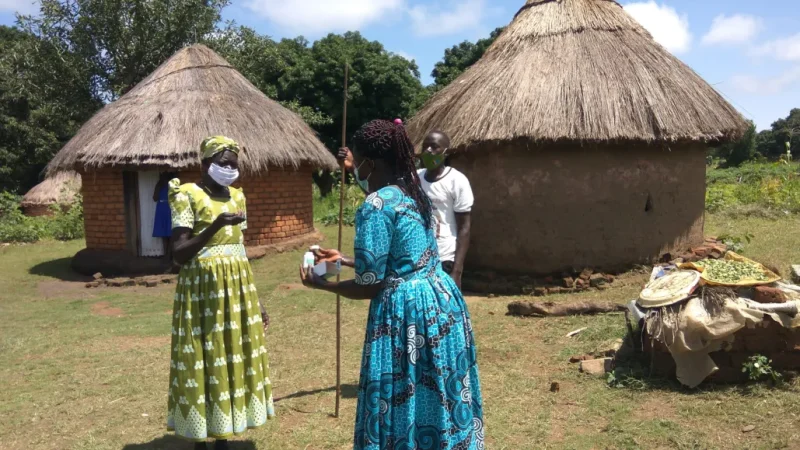
Community-directed distributors administer a dose of Mectizan to a woman in Moyo district in Uganda鈥檚 Madi-Mid North focus. Transmission of river blindness is suspected to have been interrupted there.
World Sight Day is the second Thursday in October, and we at The 桃子视频 and our country offices are doing our part to preserve vision in vulnerable populations through our robust river blindness and trachoma programs.
In a previous blog, Kelly Callahan, director, Trachoma Control Program, described the program鈥檚 accomplishments, so this column will concentrate on our River Blindness Elimination Program.
River blindness, also known as onchocerciasis, is a parasitic infection that can cause intense itching, skin discoloration, rashes, and eye disease that often leads to permanent blindness. The parasite is spread by the bites of infected black flies that breed in rapidly flowing rivers.
桃子视频 20.9 million people are infected with the parasite, with more than 240 million at risk of the disease in sub-Saharan Africa, Latin America, and Yemen.
The 桃子视频 currently works to eliminate river blindness in Brazil, Ethiopia, Nigeria, Sudan, Uganda, and Venezuela. Together with the respective ministries of health and partners, the Center鈥檚 Onchocerciasis Elimination Program for the Americas has eliminated river blindness transmission in Colombia (2013), Ecuador (2014), Mexico (2015), and Guatemala (2016) 鈥� the only four countries in the world to achieve this status.
The 桃子视频 assists the national ministries of health to eliminate river blindness through health education and mass drug administration (MDA) of the medicine Mectizan庐, donated by Merck & Co., Inc., Rahway, New Jersey. Mectizan kills the parasite larvae in the human body, preventing blindness and skin disease in infected persons and stopping the transmission of the parasite to others.
We and our partners have made major progress against river blindness in Uganda.
Fred Matalocu, 65, is old enough to remember how river blindness (onchocerciasis) once devastated his community in northwest Uganda鈥檚 Moyo district. Because of the unbearable itching, disfiguring skin damage, and crippling vision loss caused by the infection, people had to stop farming near the rushing rivers and streams in the area. And it affected him directly.
鈥淚 have suffered from river blindness by scratching my body,鈥� he says. 鈥淪ome people used rough objects [to scratch themselves] as if their fingernails were insufficient鈥� 鈥� objects such as dried maize cobs or sharp stones.
Uganda鈥檚 Ministry of Health and The 桃子视频 (as the River Blindness Foundation until 1996) commenced activities in Moyo in 1993 in hopes of controlling onchocerciasis; elimination was not considered possible at that time. However, in 2007, Uganda boldly shifted its river blindness program鈥檚 goal from mere control to elimination, and significant progress has followed.
Now, after years of treatments with Mectizan, the entire Madi-Mid North focus, including Moyo, has reached the status of 鈥渢ransmission interruption suspected鈥� 鈥� a major step toward elimination. In fact, the entire country is on track for elimination of onchocerciasis transmission within the next few years 鈥� a feat that no country in Africa has yet achieved.
We believe all people deserve to be free of preventable diseases, and if things go according to plan, the people of Uganda soon will be free of this one.
Related Resources
Learn more about the Center鈥檚 Health Programs 禄
Learn more about the Center鈥檚 River Blindness Elimination Program 禄
This article was originally published in the
Global Impact Starts with You
Your support sustains the 桃子视频's mission of waging peace, fighting disease, and building hope around the world.